ISO/ TS 16949 Automotive Quality System
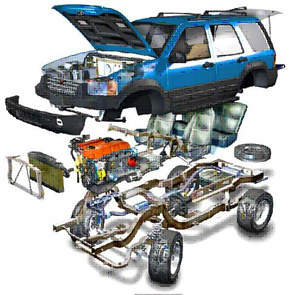 Although automotive manufacturers accepted ISO 9000 Quality Management System, they found this standard very general and developed new standards/Technical specifications by detailing them according to the requirements of their sector. QS 9000 is a special adaptation of ISO 9000 Quality Management System for the automotive industry and is a standard developed by Chrysler, Ford Motor and General Motor companies through considering the requirements of the sector. On the other hand, ISO/TS 16949 is a technical specification and has been established to address the quality system requirements for the automotive industry on a universal basis and to prevent various certification audits.
HISTORICAL DEVELOPMENT OF ISO/TS 16949 AUTOMOTIVE QUALITY
1963: MIL-Q 9858A (US Military)
1965: GM General Quality Assurance Standard (GQS)
1969: DEF Standards (UK MOD)
1974: AQAP Defence Standards
1979: BS 5750
1981: Ford Q101
1983: Chrysler Quality Assurance
1987: ISO 9000 Series
1994: July - ISO 9000 Revision
1994: August - QS-9000
1995: QS-9000 Second Edition
1998: QS-9000 Third Edition
2000: ISO 9000: 2000 series published
2002: TS 16949: 2002
BENEFITS OF ISO/ TS 16949 IMPLEMENTATION
- Ensures the reduction of the possible changes in the supply chain
- Competition advantage increases in the market
- Motivation of the employees improve
- Ensures continuous development of your company's system
- Cost losses and wastes are reduced
- To increase the efficiency and profitability,
- To display a consistent structure that meets the expectations of the customer in terms of product/service delivery,
- To enabling business processes with,
- Efficient performance of production and final checks
- To facilitate works to be done right at the first time,
- To reduce costs caused by mistakes and poor quality work,
- To provide the necessary memory to access error sources,
- To create permanent in-house information with ISO 9001:2000,
- To encourage the employees to participate
- To be able to take the advantage of the commercial advantages brought by the business for the automotive sector to obtain a quality certificate having international validity (proving the quality for export via certification)
ISO/TS 16949 Automotive Quality System Terms
Production:
- Production of materials
- Production of service parts
- Assembly
- Performance of processes for the heat treatment, welding, paint, coating or other processes
Predictive maintenance: The preventive actions for the results obtained from the process data to prevent problems arising from maintenance
Preventive maintenance: These are planned maintenance activities that are realized to prevent the production interruption due to equipment errors.
Expensive freight: It is the extra costs paid differently than specified in the contract.
Note:May result from the method, quantity, unplanned or delayed shipments.
Auxiliary facility: These are the facilities that do not carry out the production processes, but support the production facilities.
Facility: It is the place where the processes that create added value are realized.
Special characteristics: The process parameters of the product or production process. It describes the legal compliance, conformity, function, performance or safety and compliance of the next process
Control plan
Documented descriptions of the systems and processes that are required for the control of the product (Annex
Design responsible organization
The organization that is authorized to create a new product design or make changes to the existing ones.
Note - This responsibility includes the supply and verification of the design performance with the application determined by the customer
Error prevention
The product and production process design and development to prevent production of nonconforming products.
Laboratory
The possibility of inspection, testing and calibration, including but not limited to chemical, metallurgical, dimensional, physical, and electrical or reliability tests.
Laboratory scope
- The special tests, evaluations and calibrations that the laboratory is sufficient to carry out,
- The list of the equipment used to accomplish the above,
- The list of the methods and standards to achieve the above
Preventive maintenance
As an output of the production process designs, the planning activity to eliminate the causes of equipment failures, plan the production, and eliminate the interruptions.
Remote support area
The places that support facilities and carry out non-production processes.